Friday, 29 January 2021

New Books - February 2021

Zhejiang University Press 2020 
“This book is the second edition of Atlas of Oral Microbiology: From Healthy Microflora to Disease (ISBN 978-0-12-802234-4), with two new features: we add about 60 pictures of 14 newly isolated microbes from human dental plaque, at the same time, we re-organize the content of this book and provide more research progress about the oral microbiome bank of China, the invasion of oral microbiota into the gut, and the relationships between Oral Microflora and Human Diseases.
 

This book is keeping up with the advanced edge of the international research field of oral microbiology. It innovatively gives us a complete description of the oral microbial systems according to different oral ecosystems. It collects 
a large number of oral microbial pictures, including cultural pictures, colonies photos, and electron microscopy photos. It is by far the most abundant oral microbiology atlas consists of the largest number of pictures. In the meantime, it also described in detail a variety of experimental techniques, including microbiological isolation, culture, and identification. It is an atlas with strong practical function. 


The editors and writers of this book have long been engaged in teaching and research work in oral microbiology and oral microecology. This book deserves a broad audience, and it will meet the needs of researchers, clinicians, teachers, and students major in biology, dental medicine, basic medicine, or clinical medicine. It can also be used to facilitate teaching and international academic exchanges.”
 
From publisher’s website 


Springer Nature Switzerland AG 2020 
 

“This book explains how medical photography is part of the workflow in many specialties: it is needed for registries, to preserve information, for follow up, second opinion and teaching, among others. The book gathers information on this field, providing valuable practical tips for those that have never used photography for medical uses as well as those who use it regularly. Covering specialities ranging from dermatology, plastic surgery, dentistry, ophthalmology and endoscopy to forensic medicine, specimen photography and veterinary medicine, it highlights standardization for each procedure and relevance to ethical, patients’ perception of medical photography, cybersecurity and legal aspects. The book also presents practical sections explaining how to organize a photographic file, coding, reimbursement, compliance, use of social media and preservation as well as in depth concepts on sharp focus on blurred vision. This volume will appeal to all clinicians and practitioners interested in acquiring a high level of technical skill in medical photography.” From publisher’s website 


Oral Board Review for Oral and Maxillofacial Surgery / edited by Robert Reti and Damian Findlay

Springer Nature Switzerland AG 2021 

“The oral board exam for the American Board of Oral and Maxillofacial Surgery (ABOMS) can be intimidating to many surgeons due to the broad range of information one must know for the exam. However, while the examination guidelines provide a general outline of topics that may be covered, there is no true direction on how to prepare for it. Traditionally, candidates do so by using what are considered “underground” databanks, previous test questions, and power point presentations that run the gamut of commonly covered material. Until now, there have been no current comprehensive oral board review books available for the Oral and Maxillofacial Surgery boards. Oral Board Review for Oral and Maxillofacial Surgery fills that gap as the go-to resource for those attempting to successfully challenge the oral boards and for residents to polish up on their training. 

Edited and authored by top physicians in the field, this book is concise and easy to read, yet thorough with high yield information. An outline of the pertinent material is reviewed, and a patient work up is presented. Important questions to ask, signs to look for, and labs/images to order are included. It also includes tables and keywords that are typically mentioned on the exam and also offers explanations to some key points. Next are cases, which are presented in a question and answer format. As the case progresses, more complicated scenarios requiring management are presented. Lastly, complications are covered, which is the final section of each board scenario. Included are basic topics the surgeon needs to know, followed by topics that are nice to know, and numerous highly debated/complex questions that are discussed among candidates preparing for the exam. It should be noted that the authors are not privy to any inside information about the exam. What is presented is material candidates that have successfully passed the exam feel is important to know. This book is not endorsed by American Association of Oral and Maxillofacial Surgeons or the American Board of Oral and Maxillofacial Surgery.”  From publisher’s website 


“This book provides comprehensive information on the etiology, pathophysiology, medical implications, diagnosis, and surgical and nonsurgical treatment of obstructive sleep apnea (OSA).  

Divided into five parts, the book begins with principles and fundamentals of OSA and its diagnostic considerations. Subsequent parts then address non-surgical management, surgical management, and maxillomandibular advancements for OSA. Chapters seek to approach this common disorder from the viewpoint of multiple specialties, thereby promoting the development of a broad strategy for the evaluation and management of OSA patients that draws on each of them. 
 

 An invaluable reference, Management of Obstructive Sleep Apnea: An Evidence-Based, Multidisciplinary Textbook meets the needs of advanced dental and medical students, orthodontic, maxillofacial, ENT, neurology, and plastic surgery residents, and sleep medicine and pulmonary physicians.” From publisher’s website 


Regenerative Approaches in Dentistry / edited by Sepanta Hosseinpour, Laurence J. Walsh, and Keyvan Moharamzadeh 

Springer Nature Switzerland AG 2021 


“This book provides evidence-based information in the field of regenerative dentistry discussing the most recent advances, current clinical applications, limitations and future directions. The coverage encompasses the regeneration of alveolar bone, the dentine-pulp complex, enamel, the periodontium and other tissues associated with the oral cavity. A full description is provided of regenerative approaches in dentistry including regenerative endodontics and tooth repair, regenerative periodontics, regenerative assisted orthodontics, regenerative approaches in oral medicine, and dental tissue derived stem cells and their potential applications. The book is written by an international team of leading experts. It will be beneficial for students, practitioners and researchers in the fields of endodontics, periodontics and implantology.” From publisher’s website 

Springer Nature Singapore Pte Ltd. 2021


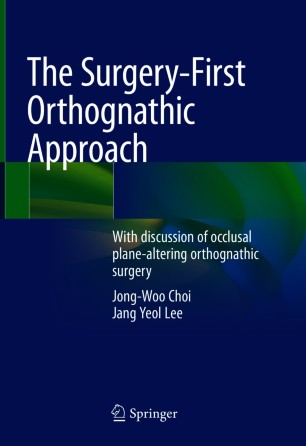
“This book is a comprehensive guide to the surgery-first orthognathic approach for patients with malocclusion and skeletal disharmony, which has been successfully applied by the authors in their practices over the past 15 years. The approach breaks with the time-tested principles of traditional orthognathic surgery in that corrective bone surgery is performed first, without the removal of dental compensations, followed by orthodontic finishing. All aspects are covered with the aid of numerous illustrations, the aim being to provide surgeons with a systematic educational tool that will enable them to introduce the approach into their own practice. In addition, the book addresses one of the hot issues in orthodontics, occlusal plane-altering orthognathic surgery, in which surgical modification of the occlusal plane is employed to treat various types of dentofacial deformity and improve facial proportions. This promises to become a very powerful tool in modern orthognathic surgery.” From publisher’s website 


2021 John Wiley & Sons, Inc. 

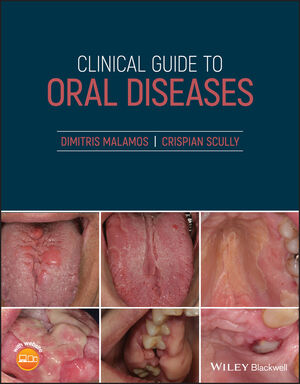
“Clinical Guide to Oral Diseases is a concise reference on the common diseases encountered in daily practice. Presenting a large selection of clinical cases, this user-friendly resource covers a range of oral and perioral lesions located in hard and soft tissues of the mouth and neck, as well as oral manifestations of various systemic diseases. Nearly 300 high-quality color images complement succinct descriptions of clinical cases seen in both community and hospital care settings.


Divided into three parts, the text first covers oral lesions classified by their color, appearance, and symptomatology such as bleeding, disturbances of saliva, taste, and orofacial pain. Part two describes the most common oral lesions by location, including those in the buccal mucosae, floor of mouth, gingivae and jaws, lips, neck, palate, salivary glands, tongue, and teeth. The third part encompasses oral lesions that are normal variations or those common to specific age groups or associated with various clinical phenomena. 


  • - Provides nearly 300 high-quality clinical photos and relevant questions to help lead readers to the proper diagnosis of common oral diseases 

  • - Contains concise tables relevant to each chapter with a list of common oral lesions and conditions 

  • - Offers MCQs of varying levels of difficulty to help readers test their knowledge in Oral Medicine 

  • - Includes clinical flow charts according to the location and duration of oral lesions 

  • Incorporates the ICD-10 Codes of oral lesions and diseases 


Clinical Guide to Oral Diseases is a valuable reference for general dental and medical practitioners, undergraduate dental students, and postgraduate trainees in oral and maxillofacial surgery, oral medicine, oral pathology, periodontology as well as general pathology, dermatology or head and neck oncology.” From publisher’s website


Advanced Laser Surgery / by Georgios E. Romanos 

2021 John Wiley & Sons, Inc. 


“Advanced Laser Surgery in Dentistry delivers a state-of-the-art reference for laser technology in the context of a dental practice. The book encompasses oral surgery, periodontology, and implant dentistry, covering the latest research, knowledge, and clinical practices. The author demonstrates the clinical relevance by including many real-world clinical cases that illustrate the application of the discussed techniques.

The book includes high-quality, color photographs throughout to support the text and add visual information to the covered topics, which include wound healing, oral surgery, periodontology, implant dentistry, and laser fundamentals and safety considerations. Advanced Laser Surgery in Dentistry provides readers with a step-by-step guide for using lasers in dental practice and discusses likely new directions and possible future treatments in the rapidly advancing field of laser dentistry. Readers will also benefit from a wide variety of subjects, including:   


  • - A thorough introduction to the fundamentals of lasers, including the beam, the laser cavity, active mediums, lenses, resonators, and delivery systems 

  • - An exploration of lasers and wound healing, including soft tissue and bone healing, as well as laser-assisted excisions and osteotomies  

  • - An analysis of lasers in periodontology, including laser-assisted bacteria reduction in the periodontal tissues and the removal of subgingival dental calculus  

  • - A discussion of lasers in implant dentistry and treatment for peri-implantitis  


Perfect for oral and maxillofacial surgeons, periodontists, and implant dentists, as well as general dentists, Advanced Laser Surgery in Dentistry will also earn a place in the libraries of dental students and residents seeking to improve their understanding of laser-based oral and dental procedures with a carefully organized reference guide.” From publisher’s website 


2021 John Wiley & Sons, Inc. 


“The thoroughly revised third edition of a Basic Guide to Oral Health Education and Promotion is an essential guide to help dental nurses prepare for a qualification in Oral Health Education and thereafter practice as an Oral Health Educator. It will help readers confidently educate patients about diseases and conditions that affect the oral cavity, and support their prevention, treatment, and management. 

Designed with an accessible layout to enhance learning, this course companion is divided into six sections covering: the structure and functions of the oral cavity; diseases and conditions; disease prevention; effective communication; treating specific patient groups, and oral health promotion and society. Invaluable to all members of the dental team and other health professionals involved in educating and promoting oral health, this key text: 


  • - Offers a guide for dental nurses taking a post-registration Certificate in Oral Health Education 

  • - Is fully updated to reflect changes in the industry, science, and course syllabus 

  • - Incorporates information on the new classification of periodontal and peri-implant diseases 

  • - Contains new information on topics including dementia, denture advice, and burning mouth syndrome 

  • - Includes an expanded section on promotion” From publisher’s website 


2021 John Wiley & Sons, Inc. 


“Combines the basic sciences and principles of dentoalveolar extractions with basic and advanced surgical techniques Principles of Dentoalveolar Extractions is a comprehensive, technical text covering the basic sciences and principles of dentoalveolar extractions, exploring both the basic surgical techniques and advanced surgical practices. 

Highly illustrated with 
colour photographs throughout, this text discusses the procedures, pitfalls, and practicalities of exodontia. It highlights the most common surgical principles encountered in clinical practice, the range of surgical instruments available, and how to manage the potential complications associated with extraction procedures. This important text: 


  • - Focuses solely on dentoalveolar extractions and surgery 

  • - Contains full colour photographs and detailed illustrations to aid learning 

  • - Offers a technical walk-through guide that can be used as a reference prior to surgery 

  • - Includes a Preface written by Professor Andrew A. C. Heggie, AM 


Written for dental students, surgical trainees and other dental professionals, Principles of Dentoalveolar Extractions provides a comprehensive and pragmatic review of dentoalveolar extractions.” From publisher’s website 

Monday, 30 November 2020

New Books - December 2020

Guided Endodontics / edited by Niraj Kinariwala and Lakshman Samaranayake 
Springer Nature Switzerland AG 2021  

"This superbly illustrated book provides a comprehensive overview of guided endodontics, a technology-driven treatment approach that represents a paradigm shift in endodontic therapy and offers predictable solutions in cases of partial or complete root canal calcification and root end surgeries. Guided endodontics has proved to be a safe, clinically feasible method for the location of root canals and prevention of root perforations.  Preoperative CBCT scans are aligned with intraoral 3D scans using special software, allowing virtual planning of the root canal access cavity. Subsequently, a 3D template can be produced to guide the drill into the calcified canal. This virtual planning helps to preserve the tooth structure and avoid procedural errors. All of these aspects are fully covered in the book, with detailed step-by-step instruction on the use of static guides and dynamic navigation systems in non-surgical treatments. The role of static and dynamic guidance in surgical endodontics is also explained, and a concluding chapter addresses future trends in 3D guidance in endodontics and other fields of dentistry.” From publisher’s website 


Clinical Management of Orthodontic Root Resorption / edited by 
Glenn T. Sameshima 
Springer Nature Switzerland AG 2021 

"This book is exceptional in being dedicated solely to root resorption caused by orthodontic tooth movement. While the core content is based on scientific evidence, the book is intended as a practical aid for the clinician who performs orthodontics. After explanation of the different types of root resorption, a series of clinically oriented chapters focus particularly on external apical root resorption. Readers will find clear guidance on etiology, risk factors, diagnosis, imaging, patient management and education, and treatment options. The long-term prognosis of teeth with resorbed roots is thoroughly discussed, and advice is provided on the measures that should be adopted if severe root resorption is encountered during or at the end of treatment. Valuable information is also presented on the practice management side of the problem, covering informed consent, record keeping, and documentation of risk. The closing chapter examines likely future directions in root resorption management. The principal author has lectured and published on the subject for more than 25 years and is internationally recognized as a leading authority. This is the FIRST book solely dedicated to orthodontic root resorption!” From publisher’s website 


Springer Nature Switzerland AG 2021 

"This book presents up-to-date information on promising indications for ultrasound in contemporary periodontics and implant therapy with the aim of assisting researchers and dental practitioners to use this novel imaging modality to advance research and patient care. Readers will find clear guidance on the application of ultrasound for evaluation of periodontal and peri-implant tissues. The mechanism of ultrasound imaging is explained in detail and compared to other imaging modalities. Furthermore, the role of ultrasound in the planning and execution of implant surgery and the assessment of implant stability is discussed. The book closes by considering the potential dental applications of functional ultrasound and volumetric ultrasound. This book will potentially be of high values for dental surgeons, periodontists, general dentists, orthodontists, dental hygienists, dental assistants, dental researchers and other practitioners, etc.” From publisher’s website 


Bioceramic Materials in Clinical Endodontics / edited by Saulius Drukteinis and Josette Camilleri 
Springer Nature Switzerland AG 2021 


"This book focuses on hydraulic calcium silicate-based materials available in clinical dentistry, used as pulp capping materials, root canal sealers, root-end fillers, or root repair materials and which offer improved properties and easier clinical application compared with the original mineral trioxide aggregate.  The book introduces the current classification of bioceramic materials and explains their characterization and their physicochemical and biological properties. Thereafter, the various clinical applications of these materials are discussed in depth with reference to the evidence base. The coverage includes applications in endodontic treatments and complications, traumatic dental injuries, management of the vital pulp in both dentitions, and regenerative endodontic procedures. Apart from presenting the latest research on hydraulic calcium silicate-based materials, Bioceramic Materials in Clinical Endodontics promotes an essential balance between basic laboratory and clinical research. It will thus be an important reference for materials science specialists, clinical researchers, and clinicians.” From publisher’s website 


Springer Nature Switzerland AG 2021 


"As the name suggests this book discusses how nanotechnology has influenced the provision of implant treatment from surgery to prosthetic reconstruction and post treatment biological complications. This book is a sequel to the earlier book “Dental Applications of Nanotechnology” published by Springer. It aims to present both the nanotechnology and allied research along with the clinical concepts of almost every different aspect of implantology in one volume. These two fraternities promote the translation of the research ideas and product development into fruitful practicalities. The first section covers nanobiomaterials in implant applications, in bone regeneration, prosthetic rehabilitation, to control biofilm and peri-implantitis, bone grafting and tissue engineering.  The second section explores applications of such new technologies in the field of implantology that gives this book a unique feature by bringing science and technology into clinical application. It covers implant stability, peri-implantitis, lasers, CAD/CAM technology, impressions, 3D printing, reconstruction with bone grafts and zygomatic implants. Comprehensive coverage includes both simple and complicated clinical cases, with practical guidance on how to apply the latest research, diagnostic tools, treatment planning, implant designs, materials, and techniques to provide superior patient outcomes. 

The book is well written and structured making it easy for experienced clinicians and those new to dental implantology as well as students, researchers, scientists and faculties of dental universities.” From publisher’s website